
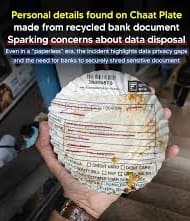
A man posted a photo online showing street food being served on a paper plate that appeared to be made from old bank documents. These papers still had customer details like names, locations, and payment information printed on them, and some of it was clearly readable.
The writer describes a normal experience of eating street food (chaat) that turns shocking when the paper plate used to serve it has someone’s bank details printed on it. By jokingly calling it a “free KYC copy.” This points out how casually sensitive personal information is being exposed. He further added that even though India talks a lot about “paperless” and digital banking, paper documents are still widely used. When these papers are thrown away without being properly shredded, they often end up in the scrap paper market and get reused to make paper plates in the unorganised sector.
He stated in the post that securely destroying old documents—through shredding or proper disposal—is not something banks can ignore or treat as a mere formality. It is a fundamental responsibility to protect customers’ data.
The post went viral because people were shocked that sensitive bank documents could end up being reused this way. Many users questioned how such papers were thrown away or sold as waste without being properly destroyed. Many reacted with anger, pointing out that such carelessness could lead to misuse of personal information or fraud. The incident started a wider discussion about poor data protection, careless paper disposal, and the lack of strict enforcement of privacy rules in India.
Others have criticised banks and financial institutions, pointing out that since they collect and store customers’ personal and banking information, it is their responsibility to ensure these documents are handled and disposed of securely, even after they are no longer needed.