
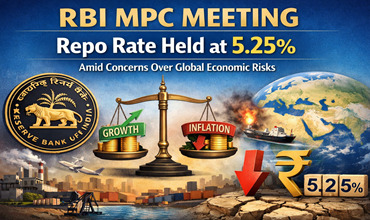
During Monetary Policy Committee press conference on Friday, RBI warned that global problems (like war and uncertainty) can hurt India’s economy in the future. If supply chains (movement of goods like oil, food, etc.) don’t improve, a small problem can become a bigger economic slowdown.
The Reserve Bank of India has decided to keep the repo rate unchanged at 5.25%, which means interest rates on loans are not likely to become cheaper or more expensive for now.
The Reserve Bank of India identified five key risks facing the Indian economy:
- Oil becoming expensive – India depends heavily on imported oil, so when global oil prices rise, it affects the country in many ways. Petrol and diesel become more expensive, which increases transportation costs. As a result, the prices of many goods and services go up, leading to inflation. At the same time, India has to spend more money on buying oil from other countries, putting extra pressure on the economy.
- Shortage of important goods – Disruptions in the supply of essential items like energy (oil and gas), fertilisers, and other commodities can create serious challenges for the economy. When these supplies are affected, factories may produce less due to higher costs or shortages, farming can suffer because fertilisers and fuel are limited, and even service sectors may slow down as overall economic activity weakens.
- People and businesses becoming cautious – Due to uncertainty in the economy, people tend to spend less and save more because they are unsure about the future. Businesses also become cautious and reduce their investments. As a result, the flow of money in the system decreases, making overall financial conditions tighter.
- Global slowdown affecting India – When other countries experience slow economic growth, they tend to buy fewer goods from India, which leads to a fall in exports. At the same time, Indians working abroad may earn less or face job uncertainties, so they send less money back home, causing remittances to decline.
- Financial market pressure – Global issues like conflicts or economic uncertainty can lead to higher interest rates around the world. When interest rates rise, borrowing money becomes more expensive for people and businesses. As a result, loans cost more and access to money becomes limited, which tightens overall financial conditions and slows down economic activity.
RBI also pointed that India depends heavily on the Middle East for its oil supply, so any problems in key routes like the Strait of Hormuz can have a big impact. When there are tensions or disruptions in this area, the supply of oil can be affected, making it harder and more expensive for India to import fuel. At the same time, such global uncertainties can weaken the Indian rupee, meaning it loses value compared to other currencies. This makes imports even costlier and puts additional pressure on the economy.
By keeping the repo rate unchanged the RBI is trying to maintain a balance—supporting economic growth while also keeping inflation (rising prices) under control, so that the economy stays stable.